RV Preventive Maintenance in Winter Garden, FL

RV Repair Winter Garden provides mobile annual and seasonal maintenance packages throughout Orange, Lake, and Osceola counties. Preventive maintenance keeps your RV trip-ready, extends the life of every system, and prevents the expensive emergency calls.

Mobile Service

RV Preventive Maintenance - We Come to Your RV

Most RV system failures are preventable with regular maintenance. Roof sealant that cracks every 18 months becomes a leak if not resealed.

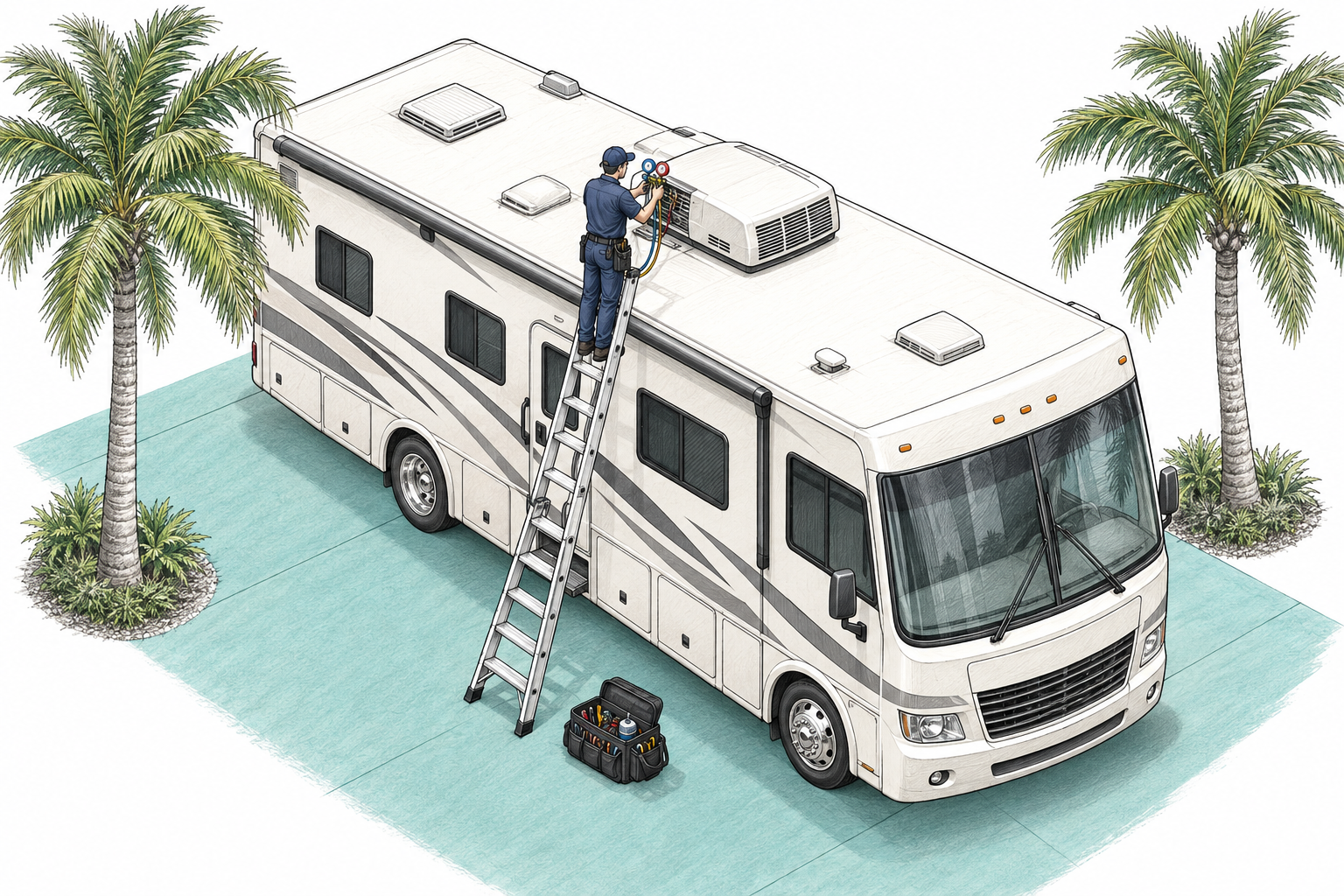
Feat Ac Repair in Winter Garden FL
Feat Ac Repair in Winter Garden, FL
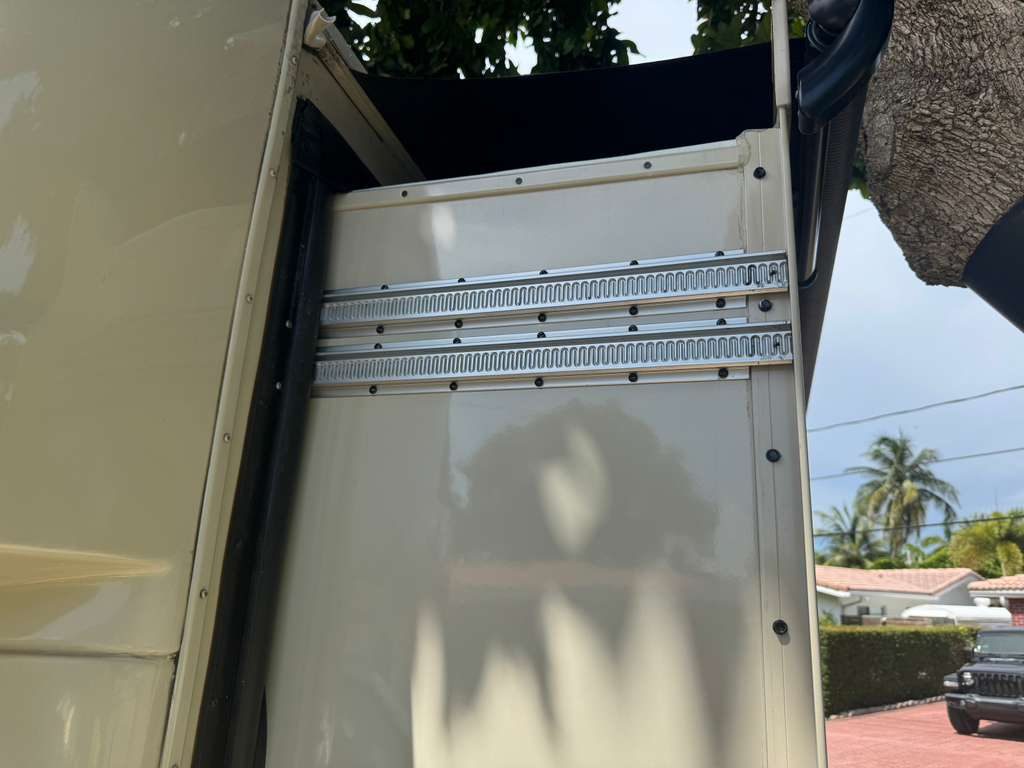
Feat Slide Out in Winter Garden FL
Feat Slide Out in Winter Garden, FL

Generator oil that goes 3 years without changing turns into a $600 repair. Slide mechanisms that aren't lubricated annually wear 5x faster.

Our annual maintenance visits cover the most maintenance-intensive items in a single trip. We come to your RV wherever it's stored, parked, or camped. Most comprehensive maintenance visits take 3-4 hours on-site.

Call (407) 555-0190 Get a Free Quote
RV Preventive Maintenance in Winter Garden FL by mobile technician
What We Repair

Annual Maintenance Package Includes

  • Full roof inspection and reseal of all seams, vents, and penetrations
  • Generator oil change, filter, spark plugs (up to 100-hour service)
  • Slide mechanism lubrication (all slides)
  • Leveling jack lubrication and function test
  • Awning fabric inspection and lubrication of arm mechanism
  • Exterior caulk inspection - windows, doors, utility bays
  • Battery load test
  • Propane system leak test
  • Air filter replacement (furnace and generator)
  • Written condition report with photos
What You Should Know

Maintenance Scheduling

The best time for annual maintenance is before the start of camping season - typically March/April in Florida. This ensures your RV is ready for spring trips and summer camping. We also recommend a post-summer inspection in October to catch anything that developed during peak use season.

For full-timers and heavy users, semi-annual maintenance visits are recommended. Call us and we'll build a schedule that works for your usage patterns.

Warning Signs

Signs You Need RV Preventive Maintenance

Catching these early saves money and prevents a roadside emergency. Our technicians see these warning signs on service calls across the Winter Garden area every week.

  • You cannot recall the last time the roof sealant was inspectedIn Central Florida, lap sealant has a functional life of 12 to 24 months in UV-exposed conditions. If you cannot recall when it was last inspected and touched up, there is a meaningful probability that at least one joint has failed and water has entered - and every month of delay increases the downstream repair cost.
  • Your generator has not been run under load for more than 30 daysAn Onan or Cummins generator that sits for more than 30 days with E10 fuel in the carburetor will begin to varnish the jets. A 30-minute run under 50 percent load monthly is the minimum maintenance interval that prevents varnish buildup in Florida's ethanol fuel environment.
  • Tire sidewalls show any checking, cracking, or surface crazingSidewall checking on RV tires is a UV and ozone degradation indicator that precedes blowout failure. Any visible surface cracking on a tire more than 5 years old is grounds for immediate replacement in Florida's high-UV environment.
  • Slideout has not been lubricated in more than 12 monthsSchwintek in-wall slide cables and rack-and-pinion gear systems in Florida humidity need lubrication every 6 to 12 months. A slide that has not been lubricated in Florida's pollen-and-humidity environment for more than a year is building toward a motor overload failure.
  • Battery water has not been checked (for flooded lead-acid batteries)Flooded lead-acid batteries in Central Florida's heat evaporate electrolyte 30 to 50 percent faster than in northern states. A battery with plates exposed above the electrolyte level is permanently damaged within hours - monthly water level checks are the correct interval in this climate.
  • The LP detector, CO detector, and smoke alarm have not been tested in 6 or more monthsSafety devices that are not tested regularly may have failed silently. LP detectors have a 5 to 7 year sensor life; CO detectors have the same limitation. A detector that does not alarm when test-activated needs immediate replacement.
  • Your RV is due for the manufacturer's 10,000-mile or annual service intervalEngine oil, transmission fluid, chassis grease points, coolant, and belt and hose inspection on Class A and Class C motorhomes follow the manufacturer's interval - but those intervals are specified for average conditions, not Florida's heat. Running slightly ahead of the manufacturer's interval protects the drivetrain in this climate.
Florida Climate Impact

What Central Florida Does to Your RV's Preventive Maintenance

Preventive maintenance for RVs in Central Florida follows a different schedule and priority than standard manufacturer-recommended service intervals, because the climate accelerates every degradation mechanism that the manufacturer's intervals were designed to address. An annual maintenance program built around Florida conditions significantly extends the life of every system on the RV and prevents the expensive cascade failures that result from deferred maintenance.

The foundational preventive maintenance task in Central Florida is the semi-annual roof inspection and lap sealant touch-up. Given the 18 to 24-month functional life of lap sealant in Florida UV conditions, a single annual inspection is at the outer edge of acceptable frequency - in our experience, semi-annual inspections catch joint failures before water intrusion begins, while annual inspections frequently find one or two joints that have already allowed some moisture entry. The semi-annual schedule - one inspection in October before the pollen season ends and one in May after the spring pollen peak - aligns with the two highest-risk periods for sealant stress and provides the best coverage for a Winter Garden or Clermont RV owner.

Engine and chassis maintenance on Class A and Class C motorhomes running in Central Florida should be performed on the shorter end of the manufacturer's recommended interval range. Florida's heat increases the rate of oil oxidation, causes coolant pH to drop faster, and accelerates the breakdown of rubber belts and hoses. A Class A diesel pusher that the manufacturer rates for 15,000-mile oil changes should be serviced at 12,000 miles in Florida summer conditions.

A coolant system flush that the manufacturer recommends at 50,000 miles should be performed at 40,000 in Florida heat. These are conservative adjustments, but they prevent the in-field failures that happen when a marginal hose or slightly degraded coolant meets a 100-degree ambient day on I-4 near Disney.

Propane system preventive maintenance is a safety investment that is often deferred until something fails. In Florida's heat, the rubber flex hoses connecting rigid propane lines to appliances harden and develop surface cracks within 5 to 7 years. These cracks are not always visible - they appear on flexing, not on visual inspection at rest.

We include a propane system pressure test in every annual service call, because a pressure test catches leaks that visual inspection misses. Replacing flex hoses proactively at the 7-year mark, regardless of appearance, is the approach we recommend for any rig that is full-time or used more than 30 days per year in Central Florida.

Tire maintenance is the preventive service with the highest safety stakes in Florida. The Florida highway patrol has documented that tire failures are the leading cause of large RV accidents on Florida interstates, and the majority of those failures involve tires that showed UV and ozone degradation but had not been replaced because tread depth was still acceptable. We recommend all RV tires be replaced at 5 years from the DOT date code (not from when they were installed - from when they were manufactured), regardless of tread depth.

For a rig that parks in direct Florida sun between trips, 5 years is the conservative but correct interval. We check and document the DOT date code on every tire at every service call and send the customer a reminder notification when any tire approaches the 4-year mark.

Water system flushing and sanitization is a preventive maintenance step that is critical in Florida's warm climate. A fresh water tank that holds residual water between camping trips develops biofilm on the tank walls within days in Florida temperatures.

Quarterly sanitization with a dilute chlorine solution - 1/4 cup of unscented household bleach per 15 gallons of tank capacity, held for 4 hours before flushing - prevents biofilm from becoming established. We include tank sanitization in every annual maintenance call and recommend quarterly self-service sanitization between service visits for full-timers at campgrounds like Disney Fort Wilderness, Kelly Park Rock Springs, and Wekiwa Springs.

Brand / ModelCommon Issue in Central Florida
Onan generator (any series)Ethanol varnish in carburetor from E10 fuel storage - monthly 30-minute loaded-run with Marine Sta-Bil in the tank prevents the varnish deposits that cause no-start conditions after storage
Lippert Schwintek slide systemCable guide channel contamination causing motor overload - semi-annual cleaning and dry-PTFE lubrication of the cable guides is the minimum Florida maintenance interval, not annual
Dometic / Norcold refrigerator (absorption)Burner orifice scale and mud dauber obstruction - annual inspection of the burner compartment and cleaning of the orifice prevents the no-ignition failures that show up at the worst possible time
Cummins ISL engine (Class A diesel)Coolant DCA additive depletion - Florida heat accelerates DCA depletion; test and supplement at every oil change interval rather than waiting for the scheduled coolant flush
Ford F53 / Freightliner chassis (Class A gas)Radiator fin fouling from Florida bugs and road debris - annual radiator cleaning with low-pressure water from the back side prevents the fin fouling that causes overtemperature on grades in Florida summer heat
Atwood / Dometic furnaceSpider web combustion air obstruction - pre-season furnace inspection includes clearing the burner air intake, which mud daubers and spiders build nests in during the months the furnace is not used in Florida's warm climate
Real Scenario

A Recent RV Preventive Maintenance Call in Our Service Area

A real call from our service area: A Winter Haven couple hired us for an annual maintenance visit on their 2018 Airstream Interstate 24GT before their annual snowbird return trip north in April. During the visit we found: roof lap sealant failures at two vent bases (sealed), a generator that was 40 hours overdue for an oil change (serviced), a slide mechanism that had worn through its lubrication entirely and was grinding on the gear rack (lubricated and inspected - no permanent damage), and a battery bank that load-tested at 62 percent capacity (they chose to replace one of the two batteries).

Total visit cost: $485 for the full package plus one battery. Catching the slide gear issue before it stripped saved them an estimated $800-$1,200 in gear box replacement costs.

Every component we found in that visit was approaching a failure threshold - not yet failed, but going to fail within the next 6-12 months of use. Annual maintenance is not about fixing things that have broken. It is about catching things that are about to break before they become roadside emergencies.

Flat-Rate Pricing

Pricing for RV Preventive Maintenance

Flat-rate quotes given before work begins. Parts and labor included. No surprises.

Service PackageNational AverageOur Flat Rate (Central FL)
Annual maintenance package (full inspection + listed items)$200 - $500$225 - $385
Generator 100-hour service add-on$80 - $175$95 - $145
Full roof reseal add-on$150 - $400$195 - $380
Battery bank load test and replacement (each)$150 - $350$185 - $320
Emergency pre-trip inspection (48-hour notice)$100 - $200$145

* Prices shown are estimated ranges based on national and Central Florida market data. Your actual cost is determined on-site by the technician after diagnosis. We quote a guaranteed flat rate before any work begins.

Mobile RV technician performing rv preventive maintenance in Winter Garden FL
Our Process

How Our Mobile Preventive Maintenance Works

We skip the tow truck and the shop drop-off entirely. Here is exactly what happens when you call RV Repair Winter Garden for rv preventive maintenance:

  1. 1Call or text us. Describe the problem and your RV location. We quote you a guaranteed flat rate before anyone drives out - no on-site diagnosis fee.
  2. 2Tech arrives at your location. Our certified technician drives directly to your wherever your RV is parked with the parts and tools for your repair.
  3. 3Repair completed on-site. We fix your RV right where it sits. Most rv preventive maintenance jobs are done in a single visit. No towing, no shop, no waiting days for an appointment.
  4. 4Pay the flat rate you were quoted. The price we quoted is the price you pay. If we find something extra, we quote it separately before touching it.
Get a Free Quote - (407) 555-0190
Specific Services

All RV Preventive Maintenance Services

Coverage

Service Areas

We provide mobile rv preventive maintenance throughout Clermont, Kissimmee, Apopka, Ocoee, Horizon West, Windermere, Groveland, Minneola, Montverde, Winter Haven, and Orlando, and all of Orange, Lake, and Osceola counties. No travel fee within our core service area.

Related Services

You May Also Need

FAQ

Common Questions

A standard RV preventive maintenance visit covering all major systems runs $285 to $550 depending on RV size and the number of items addressed. An annual maintenance package including oil change, roof inspection, battery test, generator service, and appliance verification runs $450 to $750 for a fully equipped Class A motorhome.

A comprehensive maintenance service covers: roof and seam inspection and resealing, battery test and terminal cleaning, converter and charging system test, generator service (oil, filter, spark plug, carb inspection), AC coil cleaning and capacitor test, water heater anode rod inspection, appliance operation test, tire age and pressure check, LP gas leak test, and slide and leveling lubrication.

Annually at minimum for Florida-based RVs. Twice yearly (before rainy season and before winter) is the practical standard for full-timers or heavy users. Florida's UV, heat, and humidity accelerate maintenance intervals compared to northern climates for sealants, batteries, and rubber components.

Yes - the most expensive RV repairs we see are water damage from failed sealant (preventable with annual inspection and $95 reseal), dead batteries from neglected charging (preventable with monthly check and annual test), and generator failure from never being exercised (preventable with monthly 2-hour run under load). These three items alone account for the majority of expensive mobile repair calls.

Especially on a used RV. Deferred maintenance compounds - a soft spot found at annual inspection is a $285 repair; the same soft spot found 2 years later after moisture has spread is a $1,400 repair. A first-year preventive maintenance visit on a used RV establishes a baseline and identifies what the previous owner deferred.

Yes - we perform all preventive maintenance services at your location throughout Orange, Lake, Osceola, and Polk counties. We bring all tools, fluids, and parts needed for the planned service. Providing a level area with reasonable access to all compartments helps us work efficiently.

Generator exercise is the most commonly deferred item we find - owners don't use the generator for months and then have a no-start when they need it. Followed by roof sealant inspection, which is out of sight and out of mind until water stains appear on the ceiling. Monthly generator use and spring sealant inspection are the two habits that prevent the most expensive repair calls.

Spring (April-May): reseal roof and windows, service generator, clean AC coils. Summer (June-September): monthly generator exercise, check battery water levels, inspect tire condition. Fall (October-November): post-rainy season roof inspection, battery load test, anode rod inspection.

Winter (December-March): propane system check, verify heater operation, tire pressure for cooler temps. We provide a printed Florida maintenance calendar with each annual service visit.

Yes - documented maintenance history is one of the strongest resale value indicators. An RV with a service logbook showing annual maintenance in Florida commands a meaningful premium because buyers know the common Florida damage points have been addressed. We provide a written service record for every visit.

For handy owners, many preventive tasks are DIY-capable: roof sealant inspection, battery terminal cleaning, generator oil change, tire pressure check, and appliance operation verification. The items that benefit most from professional service are battery load testing (requires a load tester), generator carburetor inspection, AC capacitor testing, and LP gas pressure and leak testing - all of which require tools and skills beyond the typical DIY level.

RV Problem? We Come to You.

Same-day service across Winter Garden and all of Central Florida. Guaranteed flat-rate pricing before we start.