RV Repair Winter Garden provides mobile rv winterization service throughout Orange, Lake, and Osceola counties. Our certified technician comes to your wherever your RV is parked. Flat-rate pricing quoted before we start - no towing required.
Our certified mobile technicians provide rv winterization service throughout Winter Garden and all of Orange, Lake, and Osceola counties. We come to your wherever your RV is parked - no towing, no shop drop-off required.
Feat Ac Repair in Winter Garden, FLFeat Slide Out in Winter Garden, FL
Flat-rate pricing is given before any work begins. You approve the price, we do the work. Available 7 days a week, 7 AM to 8 PM.
RV winterization in Winter Garden runs $85 to $175 for a standard single-bathroom unit using compressed air blow-out plus antifreeze. Larger units with multiple bathrooms and outdoor showers add $25 to $45 per additional bathroom. Most local RVers winterize as a precaution before storage rather than for freeze protection.
Florida rarely reaches freezing temperatures, but overnight lows below 32 degrees F occur several times a year in Central Florida. For full-time use, winterization is not necessary. For RVs in storage that won't be heated or monitored, winterizing is inexpensive insurance against the occasional hard freeze.
Air blow-out uses compressed air to force water out of every line and fixture - no antifreeze, no flavor in the water next spring. Antifreeze winterization pumps non-toxic RV antifreeze (propylene glycol, pink) through all lines and traps, providing more complete protection in climates with hard freezes. In Florida, air blow-out is usually adequate.
Only non-toxic RV antifreeze made from propylene glycol - never automotive antifreeze, which is toxic. Camco RV antifreeze and Prestone RV are common brands.
It is safe for all RV plumbing, water heater lines, and drain traps. Flush thoroughly in spring before using the water system.
Yes - the water heater holds 6 to 10 gallons and must be drained separately using the drain plug or anode rod opening at the bottom of the unit. For antifreeze winterization, bypass valves installed at the water heater allow you to skip filling the 6-gallon tank with antifreeze, saving significant antifreeze cost.
Pour 2 to 4 cups of RV antifreeze directly into the toilet bowl and flush to fill the trap. The black tank valve can be left open for air-out winterization. For antifreeze winterization, the toilet supply valve is the last plumbing point on the antifreeze push, so running the foot pedal until pink antifreeze appears confirms completion.
Yes - for RVs on shore power, leave the electric water heater on low. The hot water in the tank acts as a thermal buffer and keeps the water lines from reaching freezing temperatures. Turn the tank heater off before leaving the RV unattended for more than 48 hours.
A single-bathroom travel trailer or motorhome winterizes in 30 to 45 minutes. Larger Class A coaches with outdoor kitchens and multiple baths take 60 to 90 minutes. We carry the air compressor adapters and antifreeze pump needed for any winterization method.
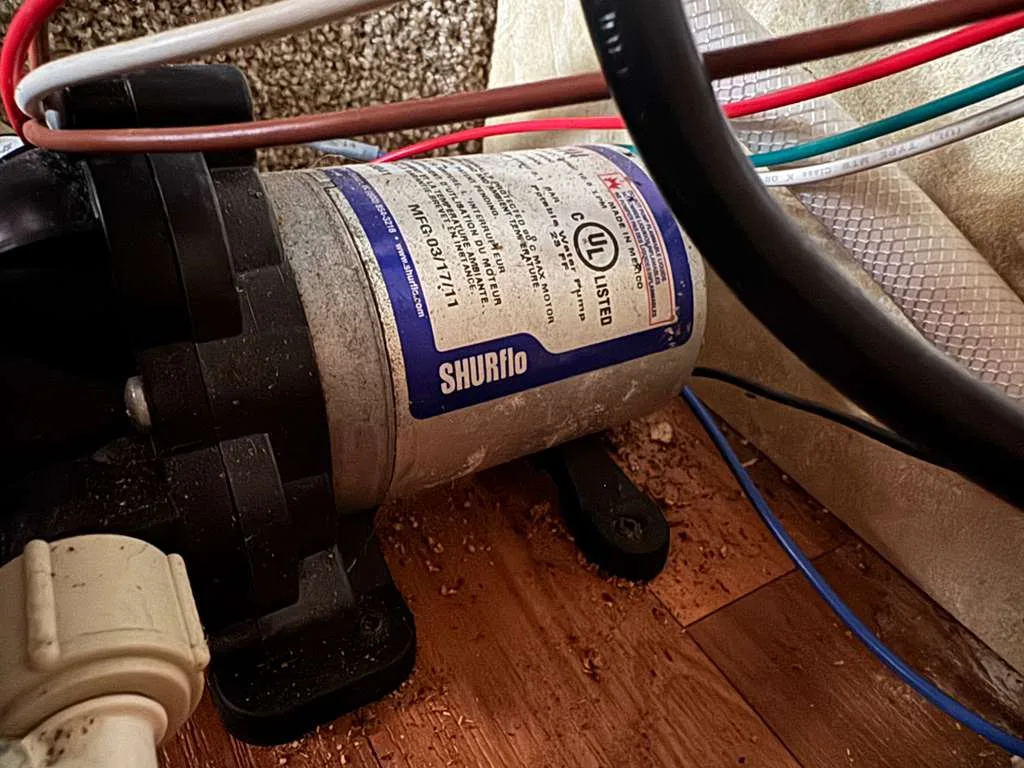
If temperatures stay below 28 degrees F for more than 3 to 4 hours, water in supply lines, the water pump, and low-point drain areas can freeze and crack fittings or the pump housing. The water heater inlet and outlet connections are particularly vulnerable. Repair costs from a single freeze event can run $350 to $850.
RV antifreeze is stable for 1 to 2 years in a closed system. For most Winter Garden storage situations, a winterization in November will keep through the following spring without degrading. Flush with fresh water for 5 to 10 gallons before using the water system after de-winterization.
FAQ
Common Questions
RV winterization in Winter Garden runs $85 to $175 for a standard single-bathroom unit using compressed air blow-out plus antifreeze. Larger units with multiple bathrooms and outdoor showers add $25 to $45 per additional bathroom. Most local RVers winterize as a precaution before storage rather than for freeze protection.
Florida rarely reaches freezing temperatures, but overnight lows below 32 degrees F occur several times a year in Central Florida. For full-time use, winterization is not necessary. For RVs in storage that won't be heated or monitored, winterizing is inexpensive insurance against the occasional hard freeze.
Air blow-out uses compressed air to force water out of every line and fixture - no antifreeze, no flavor in the water next spring. Antifreeze winterization pumps non-toxic RV antifreeze (propylene glycol, pink) through all lines and traps, providing more complete protection in climates with hard freezes. In Florida, air blow-out is usually adequate.
Only non-toxic RV antifreeze made from propylene glycol - never automotive antifreeze, which is toxic. Camco RV antifreeze and Prestone RV are common brands.
It is safe for all RV plumbing, water heater lines, and drain traps. Flush thoroughly in spring before using the water system.
Yes - the water heater holds 6 to 10 gallons and must be drained separately using the drain plug or anode rod opening at the bottom of the unit. For antifreeze winterization, bypass valves installed at the water heater allow you to skip filling the 6-gallon tank with antifreeze, saving significant antifreeze cost.
Pour 2 to 4 cups of RV antifreeze directly into the toilet bowl and flush to fill the trap. The black tank valve can be left open for air-out winterization. For antifreeze winterization, the toilet supply valve is the last plumbing point on the antifreeze push, so running the foot pedal until pink antifreeze appears confirms completion.
Yes - for RVs on shore power, leave the electric water heater on low. The hot water in the tank acts as a thermal buffer and keeps the water lines from reaching freezing temperatures. Turn the tank heater off before leaving the RV unattended for more than 48 hours.
A single-bathroom travel trailer or motorhome winterizes in 30 to 45 minutes. Larger Class A coaches with outdoor kitchens and multiple baths take 60 to 90 minutes. We carry the air compressor adapters and antifreeze pump needed for any winterization method.
If temperatures stay below 28 degrees F for more than 3 to 4 hours, water in supply lines, the water pump, and low-point drain areas can freeze and crack fittings or the pump housing. The water heater inlet and outlet connections are particularly vulnerable. Repair costs from a single freeze event can run $350 to $850.
RV antifreeze is stable for 1 to 2 years in a closed system. For most Winter Garden storage situations, a winterization in November will keep through the following spring without degrading. Flush with fresh water for 5 to 10 gallons before using the water system after de-winterization.
RV Problem? We Come to You.
Same-day service across Winter Garden and all of Central Florida. Guaranteed flat-rate pricing before we start.