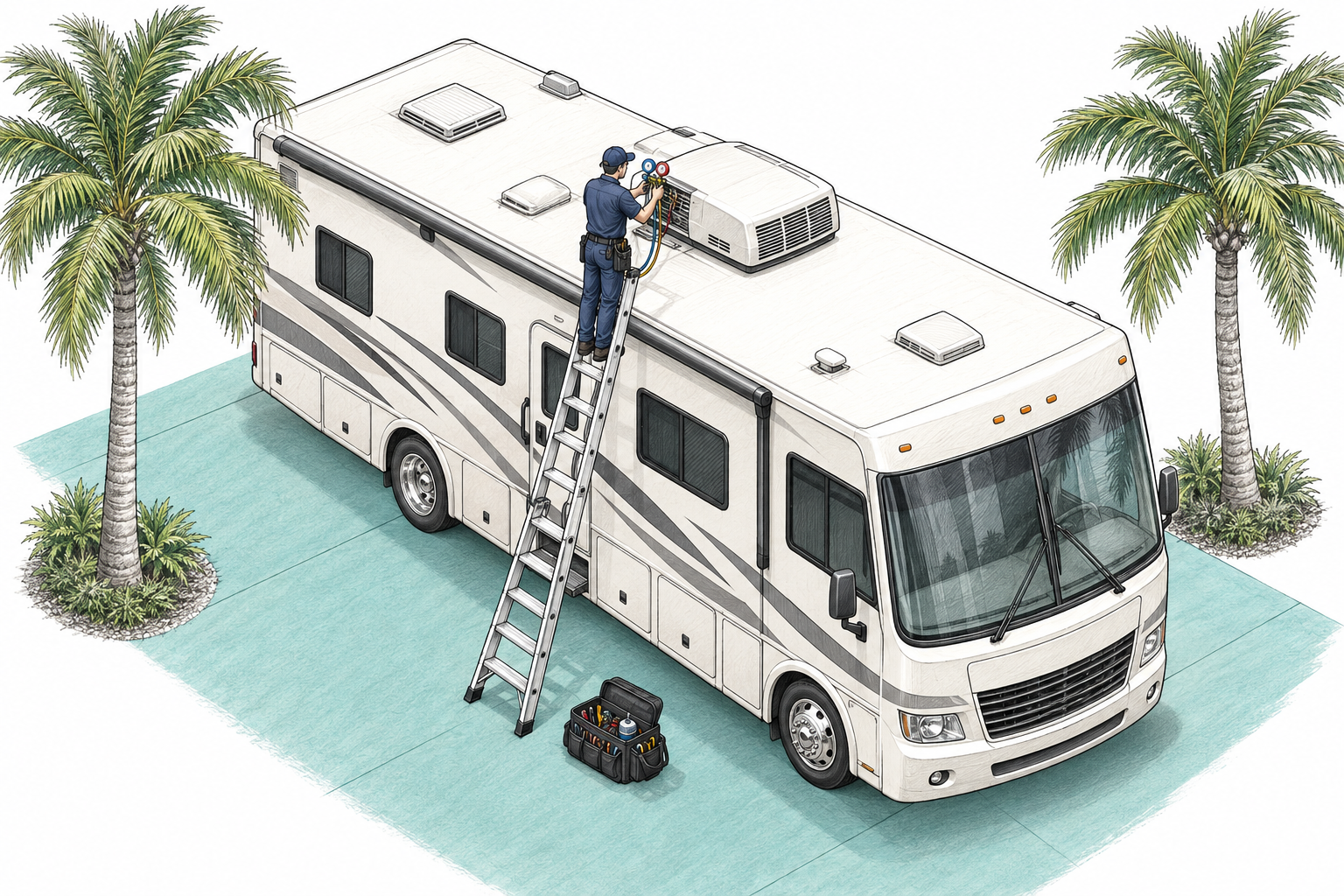
RV Repair Winter Garden provides mobile rv battery replacement throughout Orange, Lake, and Osceola counties. Our certified technician comes to your wherever your RV is parked. Flat-rate pricing quoted before we start - no towing required.
Our certified mobile technicians provide rv battery replacement throughout Winter Garden and all of Orange, Lake, and Osceola counties. We come to your wherever your RV is parked - no towing, no shop drop-off required.
Feat Slide Out in Winter Garden, FLFeat Ac Repair in Winter Garden, FL
Flat-rate pricing is given before any work begins. You approve the price, we do the work. Available 7 days a week, 7 AM to 8 PM.
Group 27 or Group 31 flooded lead-acid batteries run $95 to $145 each. AGM equivalents run $175 to $295 each.
A 100Ah lithium (LiFePO4) battery runs $450 to $750. We deliver and install at your location - most installs take 30 to 45 minutes.
AGM (Absorbed Glass Mat) is the best choice for most Florida RVers - it handles heat better than flooded lead-acid, requires no water maintenance, and can be mounted in any orientation. Lithium (LiFePO4) is the premium choice for off-grid or full-time use, offering 3 to 5 times the usable capacity and 8 to 10 year lifespan in Florida conditions.
Flooded lead-acid batteries last 2 to 3 years in Florida's climate. AGM last 4 to 6 years with proper charging. Lithium can last 10 years or more.
Heat accelerates water loss in flooded batteries and grid corrosion in all lead-acid types. Keeping batteries shaded and charged rather than discharged extends life significantly.
A battery that drops below 12.0V under normal overnight load, fails to reach 12.6V+ after a full charge, or shows significant capacity loss (camping for half as long as before) is failing. Load testing with a carbon pile tester or a smart tester like a Midtronics unit gives a definitive good/marginal/replace verdict.
Yes - two 6V golf cart batteries in series provide 12V at about 200Ah. A lithium upgrade typically replaces them with a single 100Ah or 200Ah 12V lithium battery.
The lithium's usable capacity (nearly 100% vs. 50% for lead-acid) means a 100Ah lithium effectively equals two 200Ah lead-acid batteries in real-world use.
Yes - lead-acid batteries lose water faster in heat, causing plates to sulfate if water isn't replenished. Even AGM batteries experience higher self-discharge and accelerated grid corrosion in Florida summers. Storing an RV outdoors in summer with a dead battery causes accelerated plate sulfation that can permanently reduce capacity within weeks.
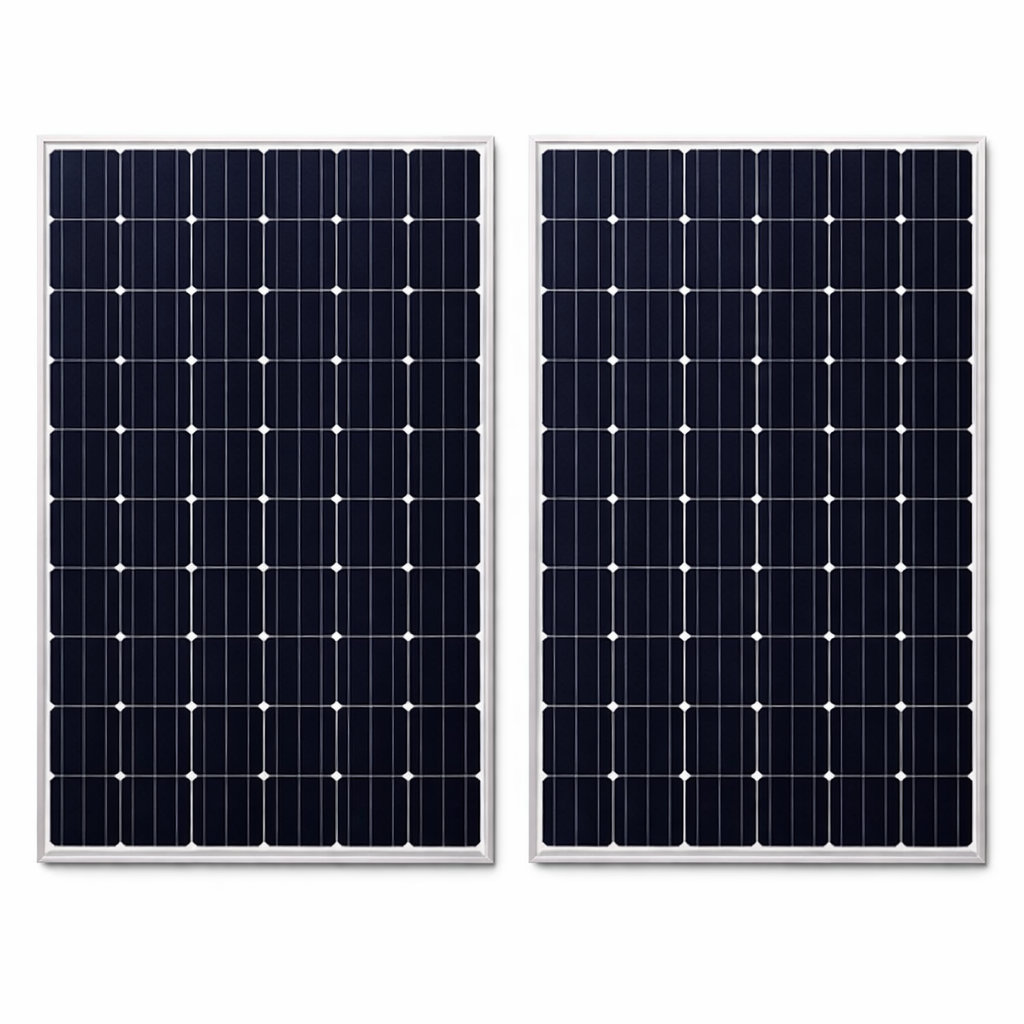
Sulfation occurs when lead-acid battery plates sit in a discharged state and lead sulfate crystals harden on the surface, permanently reducing capacity. Prevention: never leave the battery at less than 50% charge for more than a week. A trickle charger or solar maintainer connected during storage is the best prevention for Florida storage situations.
In Florida summer, an RV AC unit is typically not feasible from batteries alone for overnight use. For non-AC overnight use, a 12V compressor refrigerator draws about 30Ah per night, lighting and fans add 10 to 20Ah, and a furnace blower adds 8 to 12Ah. A 200Ah AGM or 100Ah lithium bank handles a comfortable overnight without shore power.
Yes - we bring a conductance load tester that evaluates the battery's cold cranking capacity relative to its rating. This test takes 5 minutes per battery and gives a clear good/replace result. We recommend testing house batteries before any trip over 3 nights away from shore power.
No - mixing batteries of different ages, brands, or types causes the newer batteries to work harder compensating for the weaker ones, shortening their life. When replacing batteries in a bank, replace all batteries at the same time. If only one battery has failed in a 2-bank setup, replacing both is more economical in the long run.
FAQ
Common Questions
Group 27 or Group 31 flooded lead-acid batteries run $95 to $145 each. AGM equivalents run $175 to $295 each.
A 100Ah lithium (LiFePO4) battery runs $450 to $750. We deliver and install at your location - most installs take 30 to 45 minutes.
AGM (Absorbed Glass Mat) is the best choice for most Florida RVers - it handles heat better than flooded lead-acid, requires no water maintenance, and can be mounted in any orientation. Lithium (LiFePO4) is the premium choice for off-grid or full-time use, offering 3 to 5 times the usable capacity and 8 to 10 year lifespan in Florida conditions.
Flooded lead-acid batteries last 2 to 3 years in Florida's climate. AGM last 4 to 6 years with proper charging. Lithium can last 10 years or more.
Heat accelerates water loss in flooded batteries and grid corrosion in all lead-acid types. Keeping batteries shaded and charged rather than discharged extends life significantly.
A battery that drops below 12.0V under normal overnight load, fails to reach 12.6V+ after a full charge, or shows significant capacity loss (camping for half as long as before) is failing. Load testing with a carbon pile tester or a smart tester like a Midtronics unit gives a definitive good/marginal/replace verdict.
Yes - two 6V golf cart batteries in series provide 12V at about 200Ah. A lithium upgrade typically replaces them with a single 100Ah or 200Ah 12V lithium battery.
The lithium's usable capacity (nearly 100% vs. 50% for lead-acid) means a 100Ah lithium effectively equals two 200Ah lead-acid batteries in real-world use.
Yes - lead-acid batteries lose water faster in heat, causing plates to sulfate if water isn't replenished. Even AGM batteries experience higher self-discharge and accelerated grid corrosion in Florida summers. Storing an RV outdoors in summer with a dead battery causes accelerated plate sulfation that can permanently reduce capacity within weeks.
Sulfation occurs when lead-acid battery plates sit in a discharged state and lead sulfate crystals harden on the surface, permanently reducing capacity. Prevention: never leave the battery at less than 50% charge for more than a week. A trickle charger or solar maintainer connected during storage is the best prevention for Florida storage situations.
In Florida summer, an RV AC unit is typically not feasible from batteries alone for overnight use. For non-AC overnight use, a 12V compressor refrigerator draws about 30Ah per night, lighting and fans add 10 to 20Ah, and a furnace blower adds 8 to 12Ah. A 200Ah AGM or 100Ah lithium bank handles a comfortable overnight without shore power.
Yes - we bring a conductance load tester that evaluates the battery's cold cranking capacity relative to its rating. This test takes 5 minutes per battery and gives a clear good/replace result. We recommend testing house batteries before any trip over 3 nights away from shore power.
No - mixing batteries of different ages, brands, or types causes the newer batteries to work harder compensating for the weaker ones, shortening their life. When replacing batteries in a bank, replace all batteries at the same time. If only one battery has failed in a 2-bank setup, replacing both is more economical in the long run.
RV Problem? We Come to You.
Same-day service across Winter Garden and all of Central Florida. Guaranteed flat-rate pricing before we start.